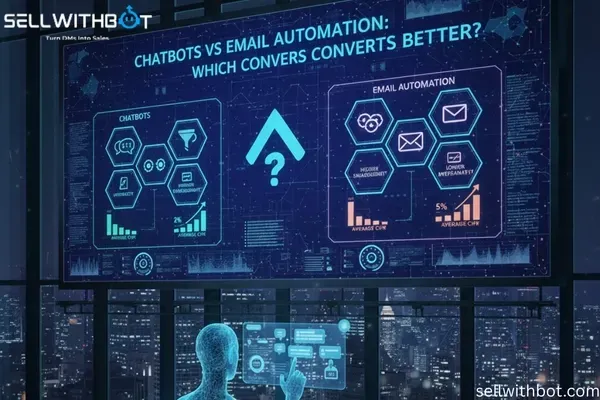
Chatbots vs Email Automation: Which Converts Better?
In the ever-evolving landscape of digital marketing, businesses are constantly seeking the most effective ways to engage audiences and drive conversions. Two of the most powerful tools in this space are chatbots and email automation. While both serve to nurture leads and guide prospects through the sales funnel, the question arises: which converts better?
In this comprehensive guide, we will analyze chatbot vs email marketing, explore ad chatbot vs email marketing strategies, provide insights on chatbot email automation comparison, and discuss the pros and cons of bot vs newsletter campaigns. By the end, you’ll have a clear understanding of which approach or combination can maximize your business growth.
Table of Contents
Understanding Chatbots and Email Automation
Why Conversion Rates Matter
Key Advantages of Chatbots
Key Advantages of Email Automation
Chatbot vs Email Marketing: A Head-to-Head Comparison
Ad Chatbot vs Email Marketing: Strategies for Maximum ROI
Chatbot Email Automation Comparison: Combining Both Channels
Bot vs Newsletter: Which Drives Better Engagement?
Metrics to Measure Success
Common Mistakes to Avoid
Case Studies: Real-World Conversions
Tools and Platforms to Implement Chatbots and Email Automation
Conclusion
Understanding Chatbots and Email Automation
Before comparing conversion rates, it’s essential to understand the functionality and purpose of each tool:
Chatbots are AI-driven tools designed to engage users in real-time conversations. They operate on websites, social media, and messaging apps, providing instant responses, personalized recommendations, and even automated sales.
Email Automation refers to using software to send scheduled, personalized, or triggered emails to a targeted audience. Common uses include newsletters, abandoned cart emails, promotional campaigns, and drip sequences.
While both aim to nurture leads and increase conversions, their delivery, engagement style, and immediacy differ significantly.
Why Conversion Rates Matter
Conversion is the ultimate measure of marketing success. Whether it’s a completed purchase, a signed-up lead, or a downloaded resource, conversion rates determine the ROI of any campaign. By understanding which channel chatbots or email drives higher conversions, businesses can allocate resources more effectively, optimize strategies, and boost revenue.
Key Advantages of Chatbots
Chatbots offer several unique advantages that can enhance conversions:
Immediate Interaction – Chatbots engage users in real time, reducing the likelihood of drop-offs.
Personalization – They can tailor responses based on user behavior, preferences, and past interactions.
Lead Qualification – Chatbots can assess user intent and segment high-quality leads for sales teams.
Seamless Sales Process – From product recommendations to checkout assistance, chatbots can guide users to complete actions.
Multichannel Presence – Chatbots work across websites, Facebook Messenger, Instagram DMs, and WhatsApp.
With these capabilities, chatbots often outperform email in terms of immediacy, engagement, and real-time conversion potential.
Key Advantages of Email Automation
Email automation, however, still holds strong advantages:
Scalable Communication – Send personalized campaigns to thousands of users simultaneously.
Content-Rich Messaging – Include detailed visuals, links, and attachments that chatbots may not support fully.
Long-Term Nurturing – Drip campaigns allow marketers to educate and guide prospects over time.
Cost-Effective – Sending emails is often cheaper than developing complex chatbot flows.
Ownership of Data – Unlike social media or third-party chat platforms, email lists are owned assets.
While slower and less interactive than chatbots, email automation excels at building long-term relationships and brand awareness.
Ad Chatbot vs Email Marketing: Strategies for Maximum ROI
Ad chatbot vs email marketing campaigns can target users differently for higher ROI:
Ad Chatbot Campaigns: Users who click ads can be greeted instantly by a chatbot, guided through product selections, and converted in minutes. This immediacy often results in higher click-to-conversion rates.
Email Marketing Campaigns: Ad-driven email campaigns capture leads via landing pages and nurture them over time with sequences. This approach builds trust and brand awareness but requires longer conversion cycles.
By combining insights from both strategies, marketers can determine which approach converts better based on audience behavior and campaign goals.
Chatbot Email Automation Comparison: Combining Both Channels
Instead of viewing chatbots and email as competitors, businesses can integrate them:
Follow-Up Emails from Chatbot Interactions – Leads captured via chatbots can receive automated email sequences for additional nurturing.
Chatbot Guidance from Email Campaigns – Emails can include links directing users to chatbots for personalized guidance.
Behavior-Based Triggers – User actions in emails (e.g., clicks, opens) can trigger chatbot engagement for immediate conversion.
This synergy of chatbot email automation comparison ensures maximum engagement, nurturing, and conversion potential.
Bot vs Newsletter: Which Drives Better Engagement?
The bot vs newsletter debate is central to digital marketing decisions:
Bots: Provide real-time interaction, personalized product recommendations, and instant lead capture. Best for immediate conversions and reducing friction in the buying process.
Newsletters: Deliver detailed content, updates, and promotions over time. Best for relationship-building, brand awareness, and long-term nurturing.
Studies and real-world campaigns show that bots often outperform newsletters in click-through and conversion rates, but newsletters excel in content engagement and long-term brand loyalty.
Metrics to Measure Success
To evaluate chatbot and email performance, track these key metrics:
Chatbots:
Engagement rate
Conversion rate
Task completion rate
Lead qualification rate
Retention rate
Email Automation:
Open rate
Click-through rate (CTR)
Bounce rate
Unsubscribe rate
Conversion rate
Monitoring these metrics allows businesses to optimize campaigns, reduce drop-offs, and increase ROI.
Common Mistakes to Avoid
Treating chatbots as purely transactional instead of conversational.
Overloading email campaigns with excessive messaging.
Ignoring the importance of personalization in both channels.
Failing to integrate chatbots and email for cohesive user journeys.
Not analyzing performance metrics to refine strategies.
Avoiding these mistakes ensures smooth, high-performing campaigns that drive measurable results.
Case Studies: Real-World Conversions
E-Commerce Brand: Implemented chatbot campaigns alongside email automation. Result: 40% higher immediate sales from chatbot interactions and 20% increase in repeat purchases from email nurturing.
B2B SaaS Company: Used chatbots to qualify leads from social ads and follow-up emails for nurturing. Outcome: 35% faster sales cycle and 25% higher conversion rate compared to email-only campaigns.
These examples highlight the power of combining chatbots with email automation to achieve maximum conversions.
Tools and Platforms to Implement Chatbots and Email Automation
ManyChat – Ideal for chatbots on social media and website integration.
Mailchimp – Popular platform for automated email campaigns.
HubSpot – Combines CRM, chatbot, and email automation.
ActiveCampaign – Integrates email sequences with behavior-driven triggers.
SellWithBot – Advanced platform for ad chatbot vs email marketing, automated sales, and analytics.
Selecting the right tools depends on your campaign objectives, target audience, and budget.
Conclusion
The debate of chatbot vs email marketing isn’t about which is universally better it’s about which performs better for your audience and goals.
Chatbots excel in real-time engagement, instant lead qualification, and immediate conversions.
Email automation shines in long-term nurturing, content delivery, and building brand loyalty.
By combining both channels, leveraging insights from chatbot email automation comparison, and optimizing campaigns based on metrics, businesses can achieve higher engagement, more conversions, and stronger ROI.
For those looking to implement high-performing chatbots to boost conversions, SellWithBot offers comprehensive solutions. Additionally, explore our guide on how AI chatbots can double your sales for actionable insights into maximizing your marketing efforts.
